
Collaborators
- Professor Kelly Chibale: H3D – University of Cape Town
- Professor Addmore Shonhai: University of Venda in South Africa.
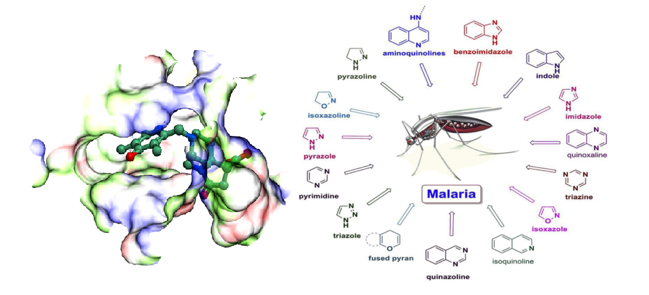
This innovation seeks to address the urgent need for new antimalarial treatments by focusing on Plasmodium falciparum heat shock proteins (PfHsp70-1 and PfHsp70-z) as novel therapeutic targets. These proteins play a key role in helping the malaria parasite survive under stress, including fever and drug pressure, making them promising candidates for drug discovery. Current antimalarial drugs face growing resistance, and there’s a pressing need to develop compounds with alternative mechanisms of action.
Our innovation combines computational drug discovery and laboratory experimentation. Using structure-based and ligand-based virtual screening, machine learning, and predictive ADMET modelling, we identify potential inhibitors from publicly available and internal compound libraries. Promising candidates are synthesized and validated in vitro using biological assays. This integrated approach enhances speed, cost-effectiveness, and accuracy in identifying new antimalarial drugs.
The innovation contributes not only to malaria research but also to building local expertise in drug discovery and computational science. It aligns with national and global health priorities while reinforcing Zimbabwe’s role in tackling infectious diseases through homegrown scientific solutions.
Key milestones
- Developed and validated homology models for PfHsp70-1 and PfHsp70-z, enabling structure-based screening
- Identified 27 active antimalarial hits against PfHsp70s from MMV and H3D compound libraries
- Performed biological assays (protein-ligand interaction and phenotypic whole cell assay) and obtained positive results.
- Optimized promising ligands to improve potency, selectivity and safety profiles.
- Developed synthetic routes of the optimized ligands.